

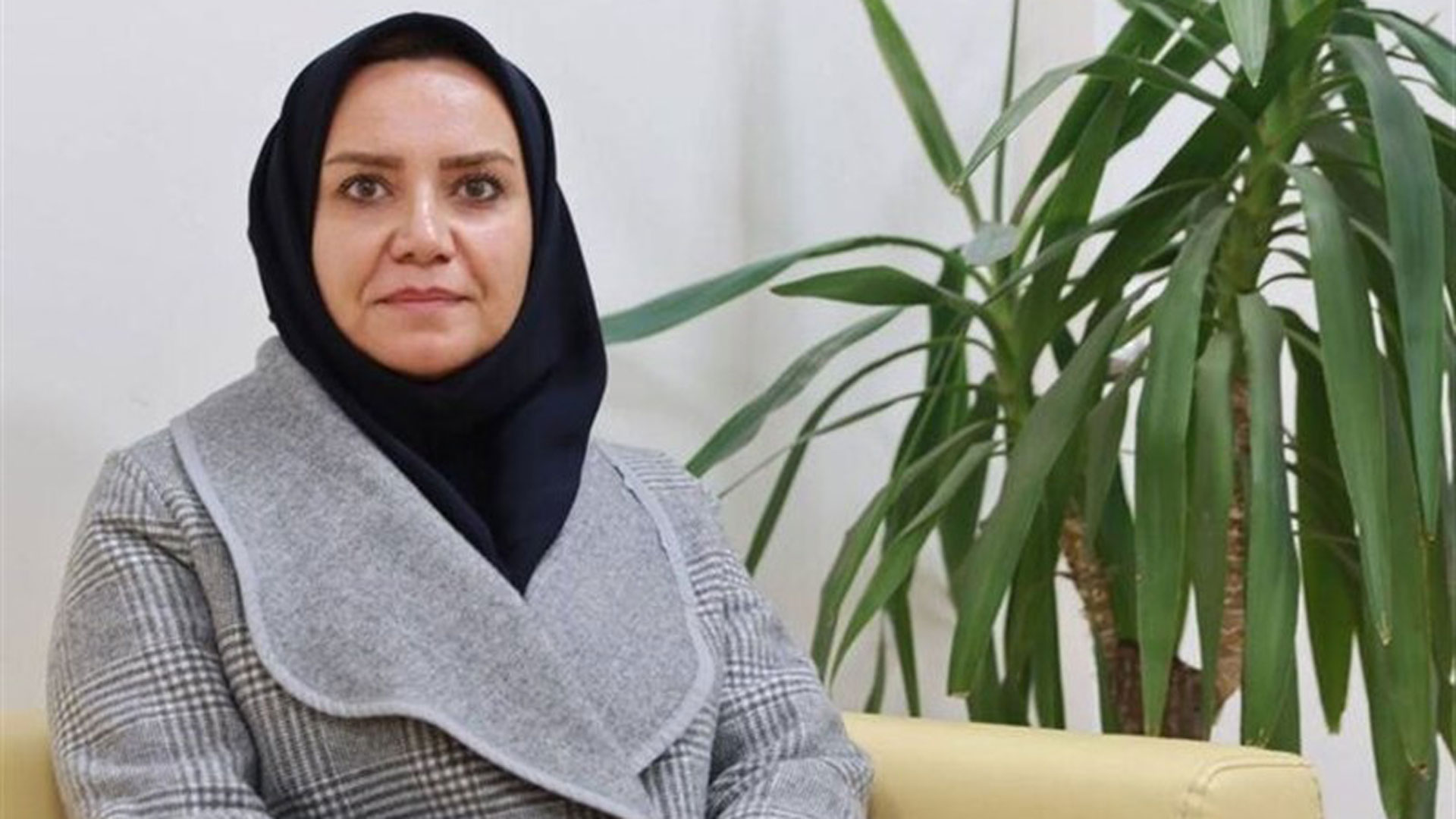
Dr. Yazdani, Secretary of the Iran Stone Association, in an exclusive interview with Tasnim News Agency, discussed the most significant challenges facing the country’s stone industry. These challenges include economic sanctions, banking restrictions, outdated machinery, and weaknesses in international marketing, all of which have affected the export of construction and decorative stones. In the interview, she emphasized the need to develop new infrastructure, including permanent stone exhibitions and the establishment of cutting workshops in target markets, and offered practical suggestions to improve the state of the industry. This interview provides an opportunity to examine concerns and key solutions for enhancing Iran’s position in the global stone market.
Tasnim: What are the most important current challenges in exporting Iran’s construction and decorative stones?
Yazdani: “Political pressures and sanctions, financial and banking restrictions, and difficulties in accessing markets and international payment methods are at the top of our challenges. High road and sea logistics costs, the lack of direct and cost-effective transport, customs delays, and fierce competition from countries like Turkey, India, and China, which have more organized supply chains and stronger branding, also place significant pressure on exporters.”
She added: “In addition, scattered production, the absence of uniform quality standards, weaknesses in packaging, and lack of delivery guarantees for large projects are other serious challenges.
Tasnim: Among these issues, which domestic and international factors exert the most pressure on exporters?
Yazdani: “From an external perspective, sanctions and issues with international banking transactions have greatly increased transaction risks. Domestically, complex tariffs and regulations, foreign currency obligations, lack of incentive policies, and high production costs due to the absence of export infrastructure and large-scale processing put significant pressure on industry players.
Tasnim: Why is a large portion of stone exports still carried out as raw blocks rather than as finished products?
Yazdani: “Over the past three years, statistics show that the weight value of cut stone exports has been nearly twice that of block exports. However, to develop finished product exports, investment is needed in processing, cutting factories, polishing, CNC machinery, and skilled labor.”
She continued: “An exporter intending to process blocks must have a defined target market, large orders, and a guaranteed sales network. Therefore, the risk of entering the finished product market is high for many industry players. At the same time, there is still international demand for blocks in some markets, and due to lower risk and easier logistics, the export process is simpler.”
Yazdani added: “Moreover, the nature of using natural stone requires that project clients receive the finished product closer to the site and according to their preferences. This is why, in all major stone-producing countries, part of the exports is carried out as blocks. This is one of the fundamental differences of construction stone, due to its natural characteristics and the need to meet market tastes.”
Tasnim: How can supportive policies encourage exporters to move toward exporting processed stone?
Yazdani: “Providing credit lines and low-interest financial facilities for the renovation or establishment of processing lines with modern technology, offering tax incentives or export exemptions conditional on increased added value, marketing guarantees and assured foreign orders, support for international marketing and national branding, establishing permanent exhibitions in target markets, and facilitating banking or trade insurance can encourage exporters to move toward greater processing and higher added value.”
Tasnim: What is the current status of stone cutting and processing machinery and technology in the country?
Yazdani: “A limited number of units have modern equipment, but a large portion of stone workshops still operate with outdated or semi-industrial machinery. This leads to inconsistent quality, low productivity, and increased waste.”
She added: “Additionally, the lack of after-sales services and spare parts for imported equipment is a serious obstacle to modernization, and we also face limitations in developing new technology.”
Tasnim: How does the modernization and updating of production lines affect the quality of exports, and what are the obstacles?
Yazdani: “It certainly has a very significant impact. New machinery improves cutting quality, reduces waste and stone slurry, ensures greater uniformity, enables the production of specialized products with precise dimensions and diverse finishes, and ultimately increases added value.”
She said: “The main obstacles to this transformation are the high investment costs for purchasing machinery, currency and banking restrictions, lack of incentive programs, and a shortage of skilled and trained personnel.”
Tasnim: What impact does establishing permanent exhibitions in target markets have on marketing?
Yazdani: “It is very effective. Permanent showrooms allow the display of real samples, provide after-sales services, and enable direct communication with local contractors and architects, increasing the likelihood of securing large projects. The experience of companies with permanent exhibitions has clearly demonstrated this.”
Tasnim: Does the Iran Stone Association have a plan for a coordinated presence at international exhibitions?
Yazdani: “Yes, we have developed a clear strategy for a coordinated presence at international exhibitions, and part of it is already being implemented. Our goal is to establish a national pavilion and present a unified Iranian stone brand.”
She added: “The main issue is the lack of national branding for Iranian stone as a single, cohesive brand. Weaknesses in packaging and professional catalogs, poor digital presence, lack of focus on project clients and major architects, absence of a B2B strategy and content marketing, as well as the lack of a strong distribution and agency network in target markets, are among our most significant challenges.”
Tasnim: What plans does the association have for promoting the Iranian stone brand?
Yazdani: “Coordinated participation in exhibitions with a national pavilion, developing unified standards and quality certificates, targeted digital campaigns, and establishing permanent showrooms in key markets are among our programs for promoting the Iranian stone brand.”
“Tasnim: How much do transportation tariffs reduce the profit from stone exports, and what are your expectations from the government?
Yazdani: “Depending on the route and destination, transportation costs for a product like stone, which is heavy and bulky, make up a large portion of the final price and reduce the producer’s profit. We expect the government to support this industry by negotiating for direct and cost-effective shipping lines, providing subsidized facilities or tax exemptions for export transport, developing port logistics infrastructure, and establishing regional transit hubs.”
Tasnim: How feasible and economically viable is it to establish cutting workshops at the destination?
Yazdani: “In many cases, this can be economical and strategic, especially for accessing large projects. Transporting blocks at a lower cost and cutting and processing them near the customer reduces shipping expenses and allows the use of cheaper local labor.”
The Secretary of the Stone Association added: “Of course, this approach requires market studies, investment, intellectual property verification, and quality management to ensure the Iranian brand is preserved and the added value is not lost along the chain.”
Tasnim: How do you view the outlook for exporting Iran’s construction and decorative stones?
Yazdani: “The outlook is optimistic but conditional. With equipment modernization, targeted incentive policies, branding, and reduction of financial and logistical barriers, Iran can capture a significant share of regional and international markets.”
She added, “An annual export potential worth several billion dollars, given the country’s reserves and stone quality, is not unrealistic. However, without these reforms, growth will remain limited and competitiveness low.”
Tasnim: Which new markets have you targeted for expanding exports?
Yazdani: “Regional and neighboring markets such as Iraq, the UAE, and the Gulf countries; luxury construction projects; markets in Central Asia and the Caucasus (Uzbekistan, Azerbaijan, Georgia); and Turkey as a distribution hub, as well as African markets and some European and Latin American countries for special high-value-added products. Overall, prioritization should be based on financial accessibility and logistics costs.”
Comments